Types of Pollution
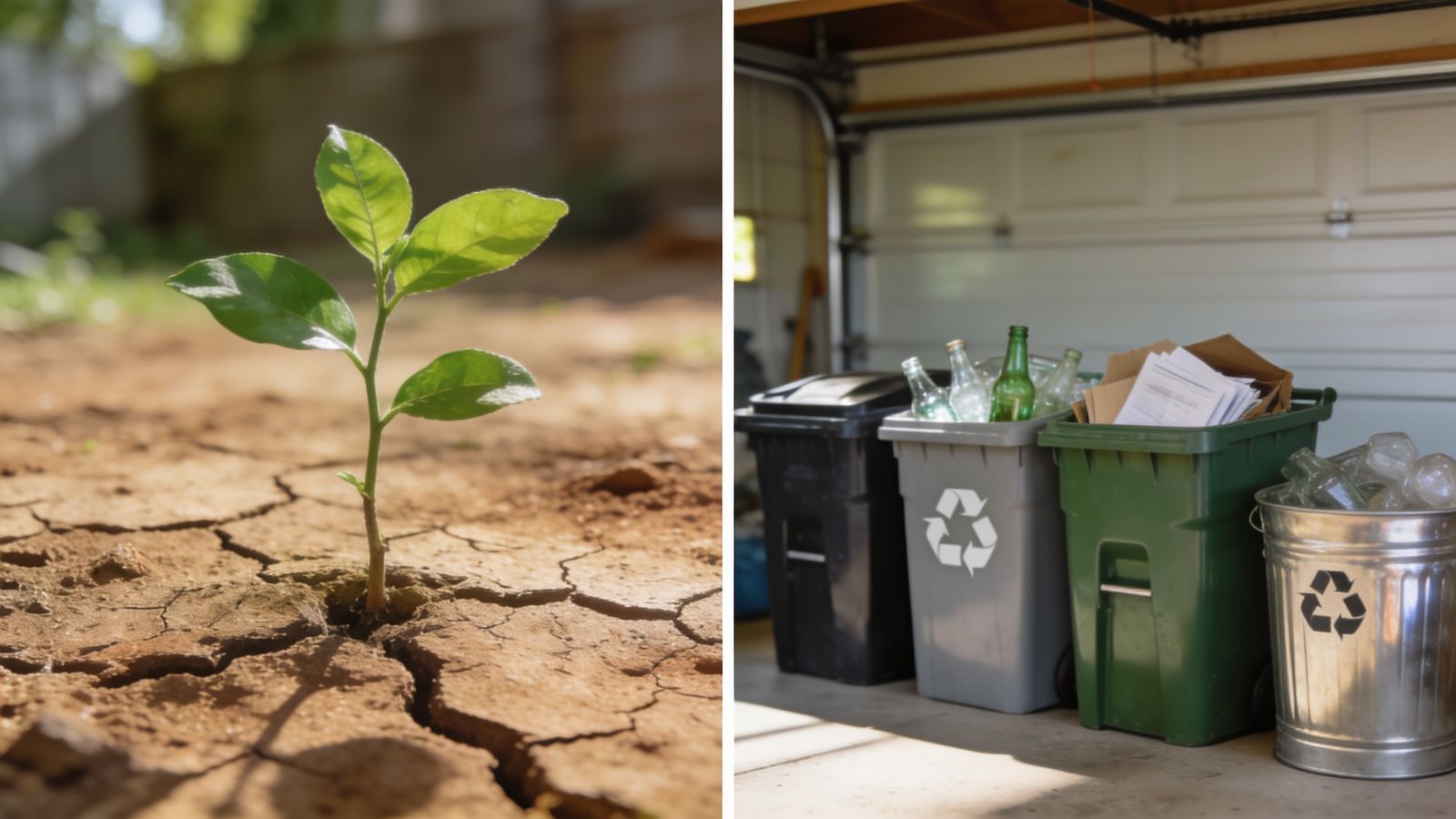
"Pollution" covers more than smokestacks and litter. Understanding the different forms helps explain why so many everyday choices — from the cleaning products under a sink to the packaging on a delivery box — connect back to environmental health.
Air pollution comes from vehicle exhaust, industrial emissions, and even indoor sources like certain cleaning sprays and synthetic fragrances. Long-term exposure is linked to respiratory and cardiovascular strain, which is part of why so many household product lines have shifted toward lower-VOC formulas.
Water pollution happens when chemicals, waste, or excess nutrients (often from fertilizer runoff) enter rivers, lakes, and groundwater. It can come from a single industrial source or accumulate gradually from many small ones — including what gets rinsed down a household drain.
Soil pollution is often the least visible. Pesticide residue, improperly disposed chemicals, and heavy metals can persist in soil for years, affecting what's grown in it long after the original contamination.
Noise and light pollution are less discussed but well documented — excess artificial light disrupts wildlife and human sleep cycles, while chronic noise exposure is linked to stress in both people and animals.
None of these categories exist in isolation, and no single household eliminates them alone. But small substitutions — an organic cleaner instead of a synthetic one, a reusable container instead of disposable packaging — add up when enough people make them consistently.